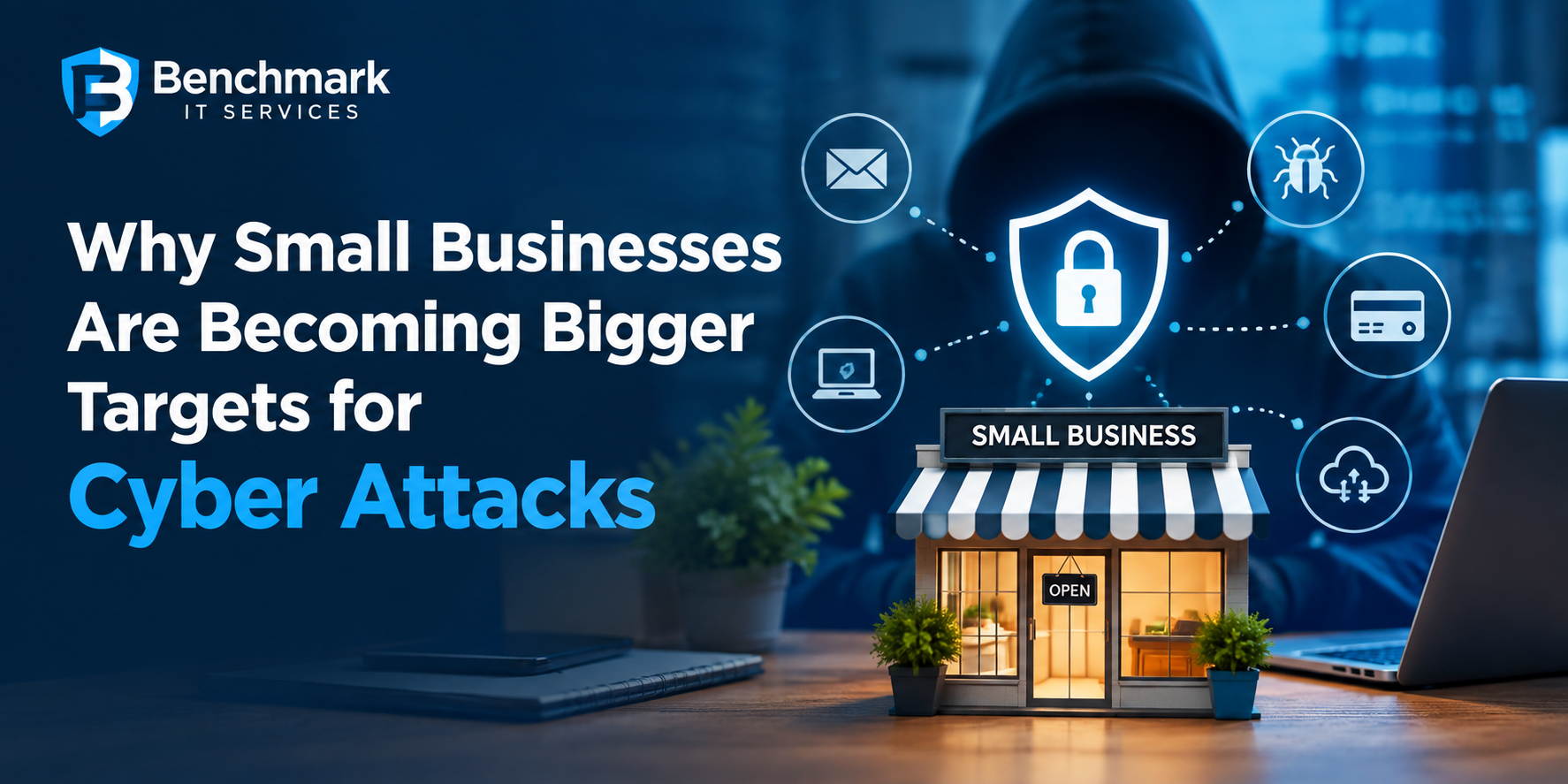
Cybercriminals are increasingly turning their attention to small businesses, where limited security resources can leave valuable data and systems more exposed.
For many small businesses, a single successful cyber attack can interrupt operations, expose customer information and create unexpected financial costs. Understanding why attackers target smaller organisations is therefore an important part of building a stronger security strategy.
Why Are Small Businesses Attractive Targets?
Cybercriminals often target businesses where security weaknesses give them an easier path to their objectives. A small business may not have the same cybersecurity budget as a large enterprise, but it can still hold valuable data and provide access to financial accounts, customer information, employee records and business systems.
Several factors can make smaller organisations attractive targets.
- Limited Cybersecurity Resources
Many small businesses operate with a small internal IT team or rely on external IT providers. Security monitoring, vulnerability management, employee awareness training and incident response may not always receive the attention they require.
Attackers can take advantage of weaknesses such as outdated software, poorly protected accounts, unsecured devices and misconfigured systems.
This does not mean small businesses are careless. It often means they have fewer people and resources available to manage an increasingly complex security environment.
- Valuable Business Data
A small business can hold information that is valuable to cyber criminals, including:
- Customer contact information
- Employee records
- Financial information
- Business documents
- Login credentials
- Supplier information
- Payment information
- Confidential company data
Even when a company does not store highly sensitive information, attackers may use compromised accounts to access other systems or carry out further attacks.
- Employees Can Become an Entry Point
Cyber criminals frequently target people rather than technology alone.
A convincing phishing email can encourage an employee to click a malicious link, download a harmful attachment or provide login credentials. Social engineering attacks can also involve fake invoices, impersonation attempts and fraudulent requests from someone pretending to be a manager, supplier or customer.
Employee awareness therefore plays an important role in cybersecurity.
- Remote and Hybrid Working Creates More Security Challenges
Remote and hybrid working have changed how employees access business systems.
Employees may connect from homes, shared workspaces or other locations using laptops, mobile devices and cloud applications. Without appropriate security controls, every additional device and connection can create another potential point of attack.
Businesses need to consider device security, access controls, authentication, software updates and secure connections when supporting remote workers.
Common Cyber Attacks Against Small Businesses
Small businesses can face many of the same threats as larger organisations.
Phishing
Phishing messages attempt to trick employees into revealing information, opening malicious links or transferring money. They may appear to come from banks, suppliers, customers, delivery companies or even senior employees.
Ransomware
Ransomware can prevent access to files or systems and may result in demands for payment. The disruption can be particularly damaging for a small business that depends heavily on its IT systems for everyday operations.
Business Email Compromise
Attackers may compromise or imitate a business email account and use it to request payments, change bank details or obtain confidential information.
Password Attacks
Weak, reused or compromised passwords can give attackers access to business accounts. Using strong passwords together with multi factor authentication can significantly improve account protection.
Malware
Malicious software can enter business systems through unsafe downloads, attachments, compromised websites or other attack methods. Depending on the malware, it may steal information, damage files or provide unauthorised access.
Why One Security Weakness Can Become a Bigger Problem
Cyber attacks do not always start with a sophisticated technical exploit.
Sometimes the initial weakness is relatively simple. An employee may use a compromised password. A laptop running outdated software can create an avoidable security weakness. An old user account may remain active after an employee leaves. A cloud application may have excessive permissions.
Once attackers gain initial access, they may attempt to move further through the environment.
This is why cybersecurity should not focus on a single security product. Businesses need multiple layers of protection that work together.
What Can Small Businesses Do to Reduce Cyber Risk?
Small businesses do not necessarily need an enormous cybersecurity budget to improve their security posture. The first step is understanding where the biggest risks exist.
Start With a Security Risk Assessment
A cybersecurity risk assessment can help identify weaknesses across devices, applications, accounts, networks and business processes.
It can also help prioritise security improvements based on the actual risks facing the organisation.
Protect User Accounts
Businesses should consider strong password policies, multi factor authentication and appropriate access permissions.
Employees should only receive access to the systems and information they need for their responsibilities.
Keep Software and Devices Updated
Security updates often address known vulnerabilities. Delaying updates can leave systems exposed to attacks that could potentially have been prevented.
Businesses should establish a consistent process for updating operating systems, applications, network equipment and other technology.
Maintain Reliable Backups
Backups are particularly important when dealing with ransomware, accidental deletion or system failures.
Important business information should be backed up regularly, and businesses should also consider how those backups would be restored during an incident.
Train Employees
Technology alone cannot eliminate every cyber risk.
Employees should understand how to recognise suspicious emails, unusual login requests, fraudulent payment instructions and other common social engineering techniques.
Regular cybersecurity awareness training can help employees become an additional layer of defence.
Monitor for Suspicious Activity
Businesses need visibility into what is happening across their systems.
Security monitoring can help identify unusual login attempts, suspicious device activity, malware indicators and other potential warning signs before a small incident becomes a larger security problem.
When Should a Small Business Consider Professional Cybersecurity Support?
Some businesses try to manage cybersecurity internally, while others rely on an external IT provider. The right approach depends on the organisation’s size, technology environment, regulatory requirements and risk profile.
Businesses with limited internal security expertise can turn to specialised cybersecurity providers for additional protection and guidance.
Working with experienced cyber security companies in Melbourne can help businesses assess their current security position, identify vulnerabilities and develop practical security measures based on their specific environment.
Effective cybersecurity is about building strong protection across your entire IT environment, not simply adding more security tools.
Cybersecurity Should Be a Business Priority
Small businesses may not have the same resources as large enterprises, but they can still take meaningful steps to reduce cyber risk.
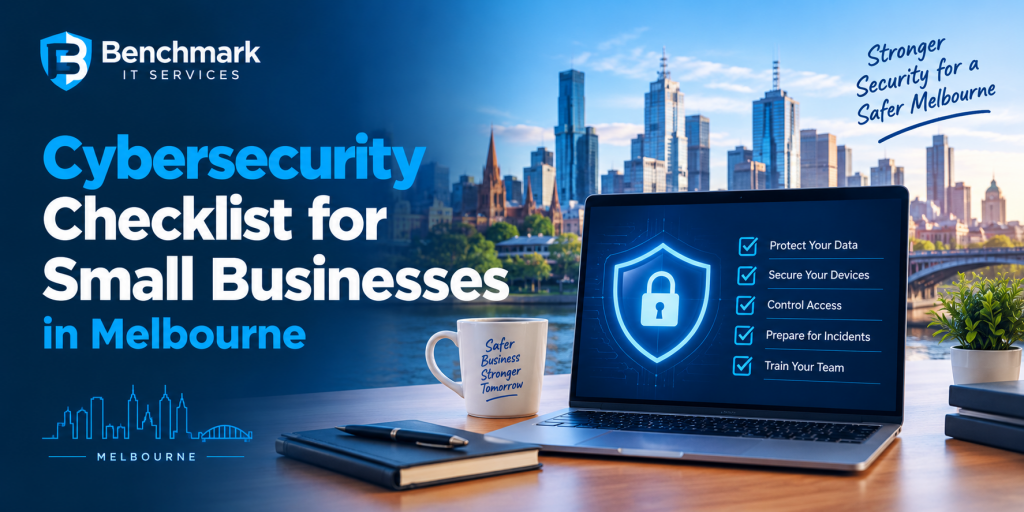
Strong authentication, employee training, regular updates, reliable backups, access controls, security monitoring and ongoing risk assessments can collectively make it harder for attackers to compromise business systems.
Cybersecurity is also not a one-time project. Threats continue to evolve, business systems change and new vulnerabilities emerge. Regular reviews are therefore important for maintaining an effective security strategy.
For Melbourne businesses, partnering with experienced cyber security companies in Melbourne can provide access to specialist knowledge and ongoing security support without requiring a large internal cybersecurity team.
The important thing is to start before an attack happens. A proactive approach can help identify weaknesses early, improve resilience and give businesses greater confidence in the security of their systems and information.